
The Gut Brain Communication in Parkinson’s Disease Consortium (GBPDC), funded by the National Institute of Diabetes and Digestive and Kidney Disease (NIDDK), brings together researchers who seek to better understand the connection between gut health, the brain, and Parkinson’s Disease (PD).
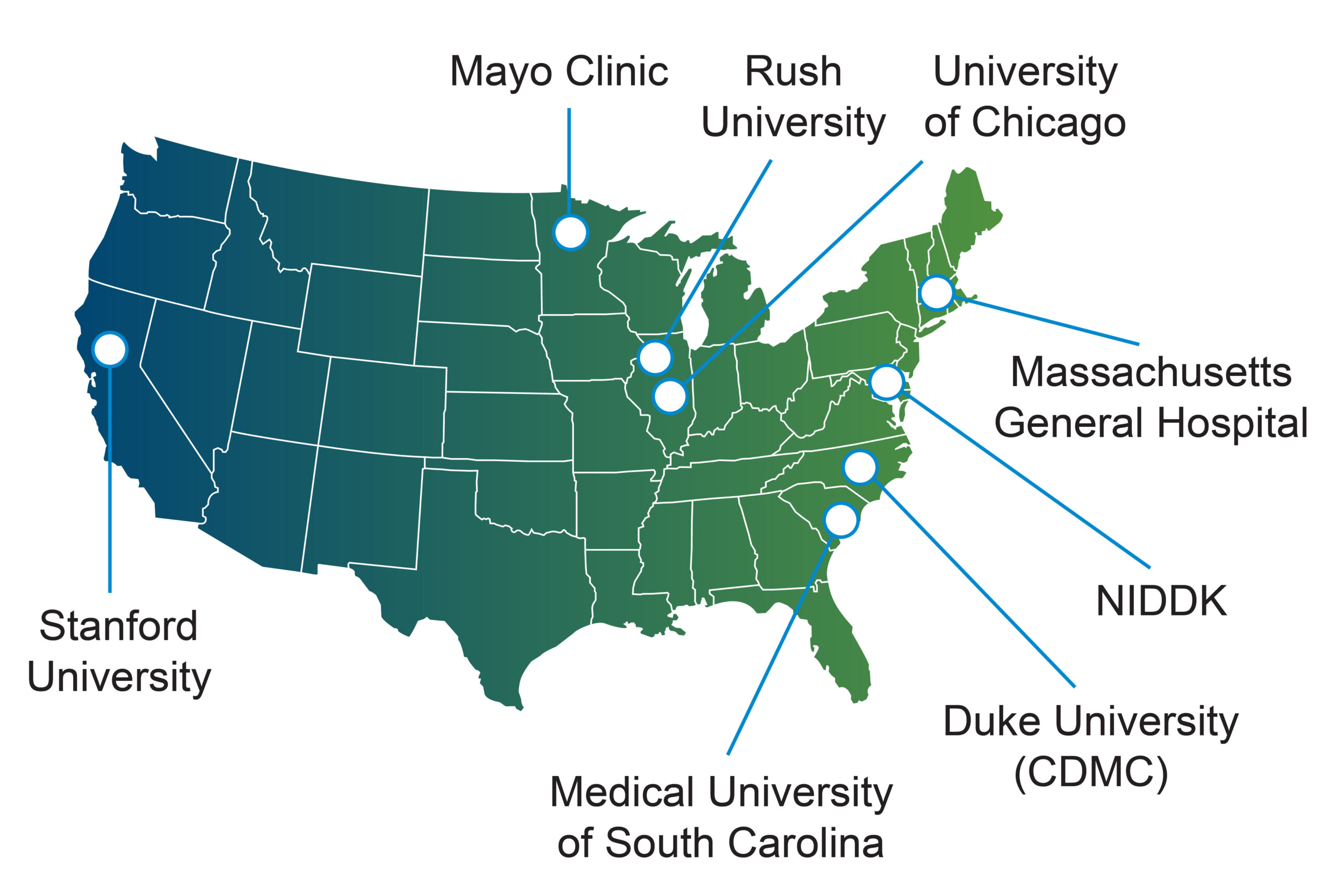
The GBPDC seeks to leverage the potential role of the GI tract in the pathogenesis and progress of PD to improve patient diagnosis, care, and outcomes. Consisting of one Coordinating and Data Management Center (CDMC) and five Gastroenterology Neurology Research Centers (GNRCs) working in partnership with NIDDK, this consortium is a multidisciplinary collaborative effort to provide the infrastructure needed to establish an annotated repository of data and biospecimens to allow for the identification and validation of innovative early-phase GI-based diagnostic tools and biomarkers for PD. While major goals of the GBPDC are enrollment of participants with and without PD and collection of biological samples, the GNRCs are also planning and conducting mechanistic studies that leverage the use of these biosamples.
About the CDMC
The GBPDC CDMC is based at the Duke Clinical Research Institute (DCRI) and brings together GBPDC investigators from multiple institutions to support the development of protocols, analysis plans, collaborative dashboards, a data and biospecimens hub, and other resources to shed light on the potential connections between the gut, brain, and Parkinson’s disease.
About the GNRCs
The GBPDC Gastroenterology Neurology Research Centers are academic institutions based at six sites in the United States that bring GI and neurology experts together to enroll participants, develop protocols, and conduct studies to meet GBPDC goals.
PD is the second most common and fastest growing neurodegenerative disorder in the United States. According to the National Institutes of Health (NIH) and the NIDDK, more than 50% of patients who develop PD have a history of bowel complaints, predominantly constipation, gastroesophageal reflux, and nausea, which often precede the onset of motor symptoms. These findings indicate that gastrointestinal (GI) dysfunction may be an early manifestation of the disease and that the gut may be an unexplored diagnostic and/or therapeutic target.
About the Funder
The GBPDC is funded by the National Institute of Diabetes and Digestive and Kidney Diseases (NIDDK). The mission of the NIDDK is to conduct and support medical research and research training and to disseminate science-based information on diabetes and other endocrine and metabolic diseases; digestive diseases, nutritional disorders, and obesity; and kidney, urologic, and hematologic diseases, to improve people’s health and quality of life.
A secure web portal where internal users can access information about the GBPDC Program, including the publications process, document storage, collaboration, governance (GBPDC policies and procedures) and GBPDC templates.
Need help? Contact: GBPDC-CDMC@dm.duke.edu